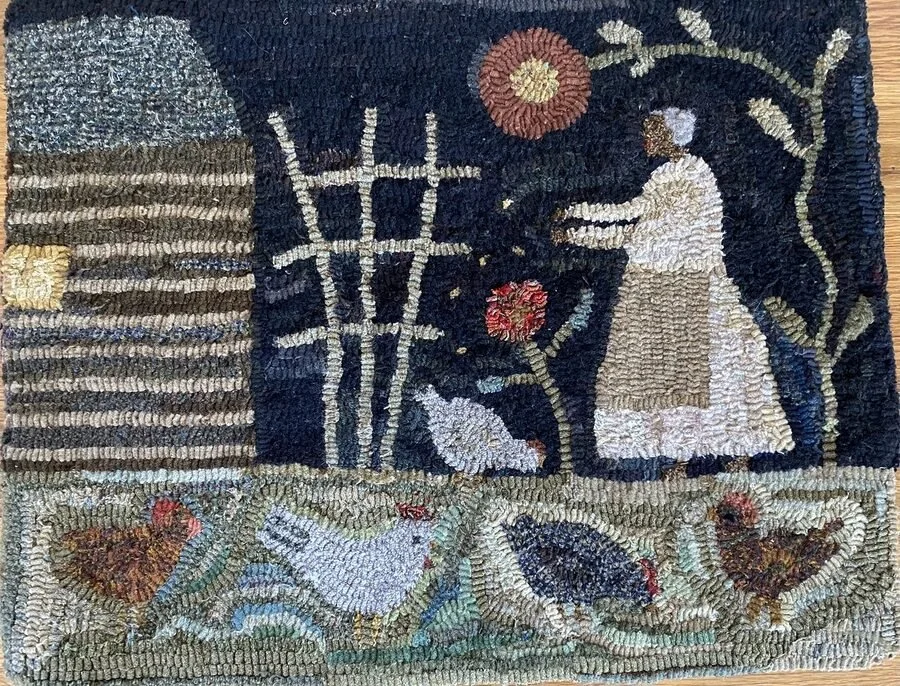
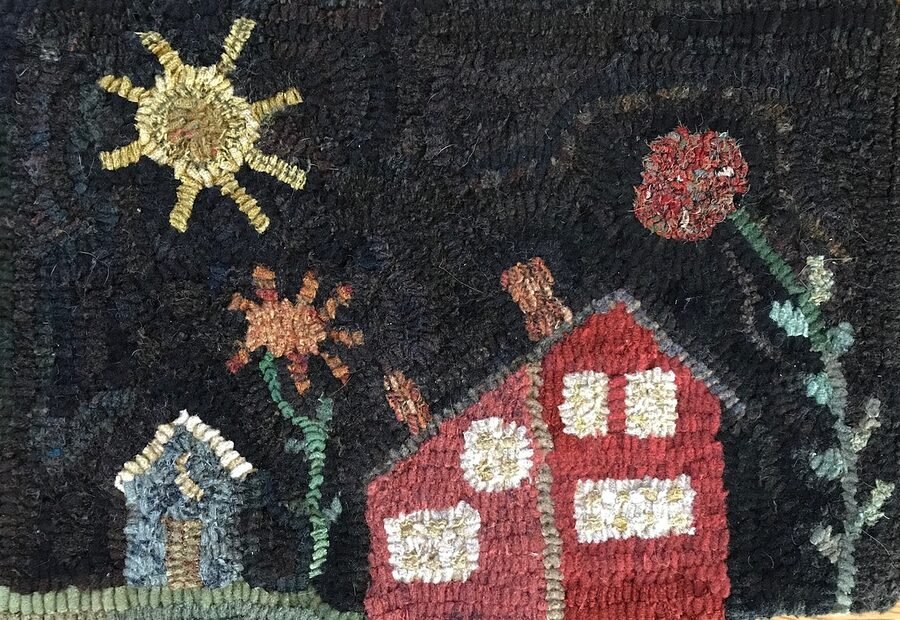
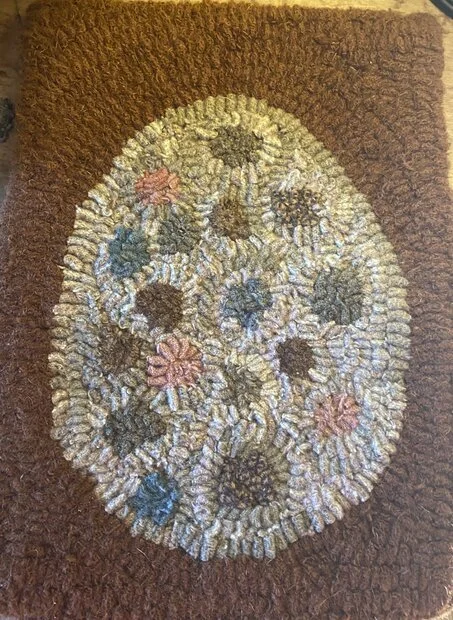
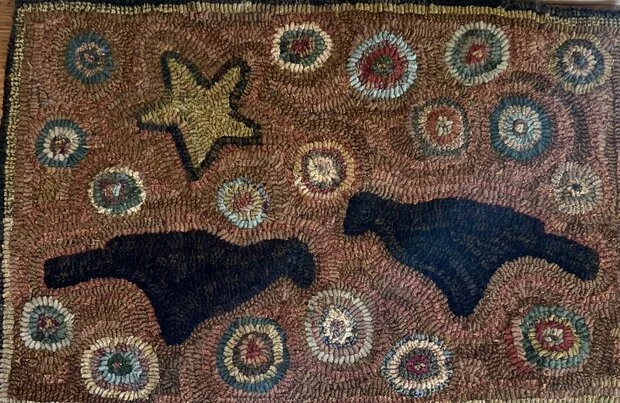
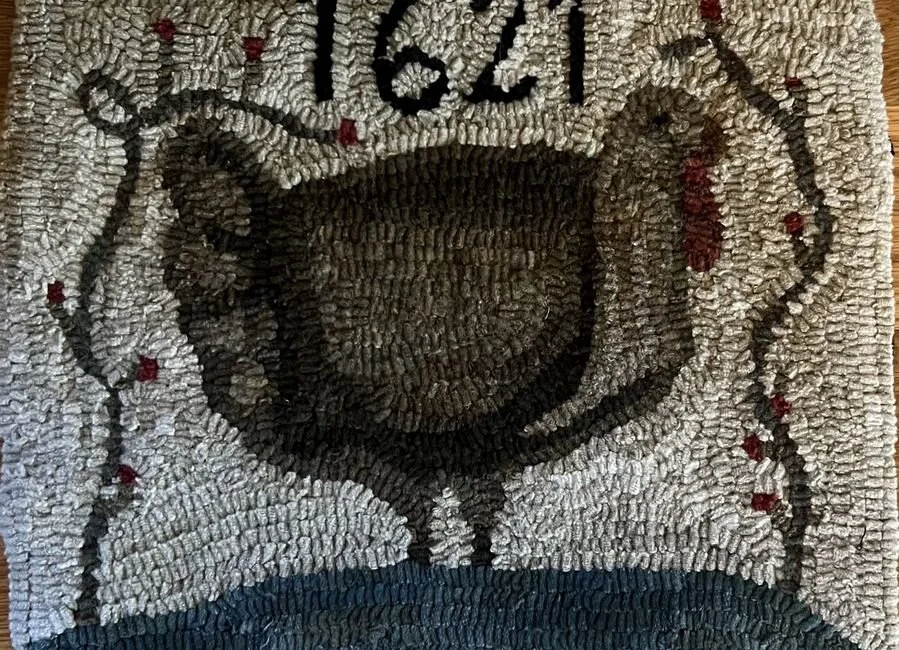
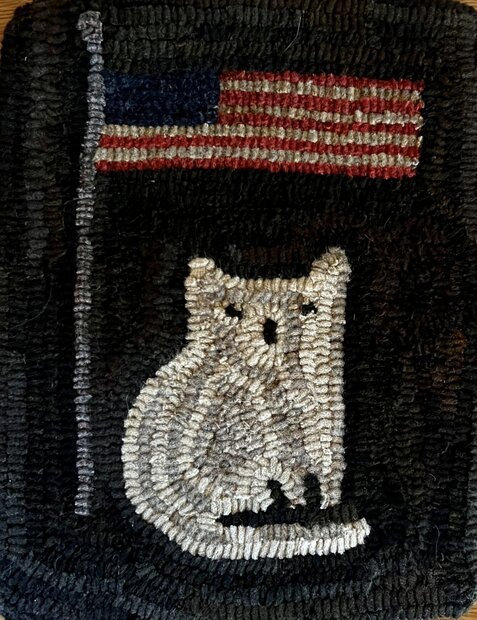
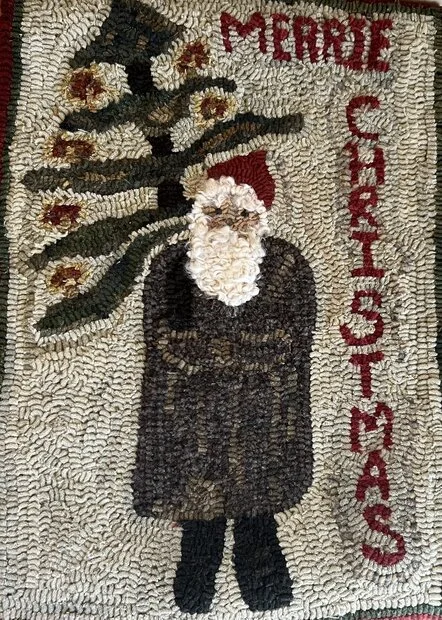
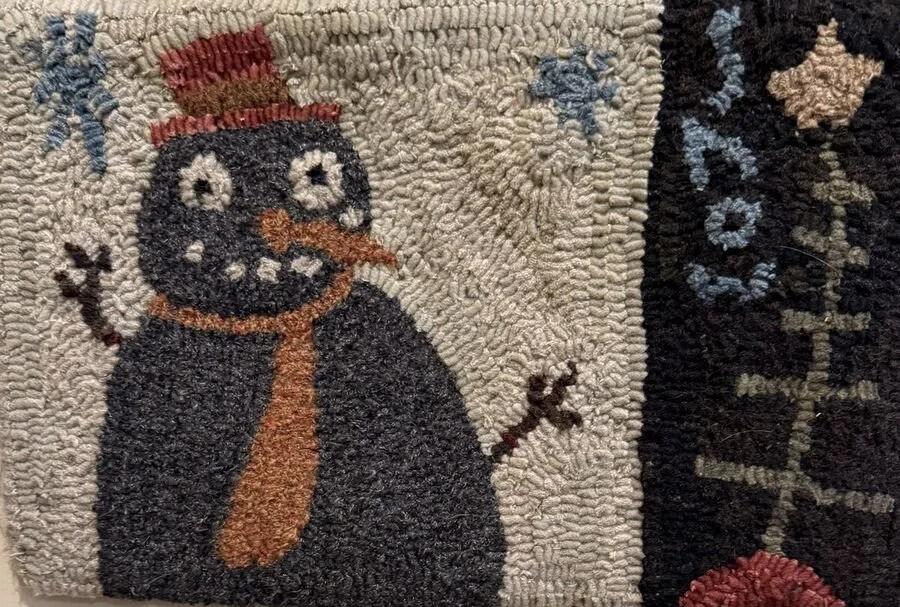
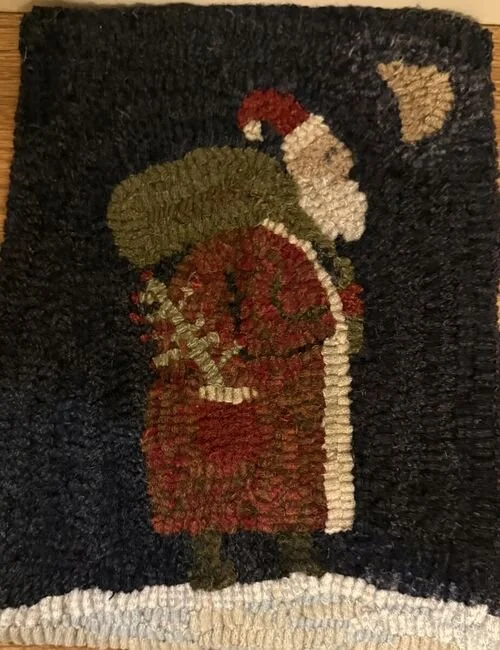
The Story Behind the Rugs
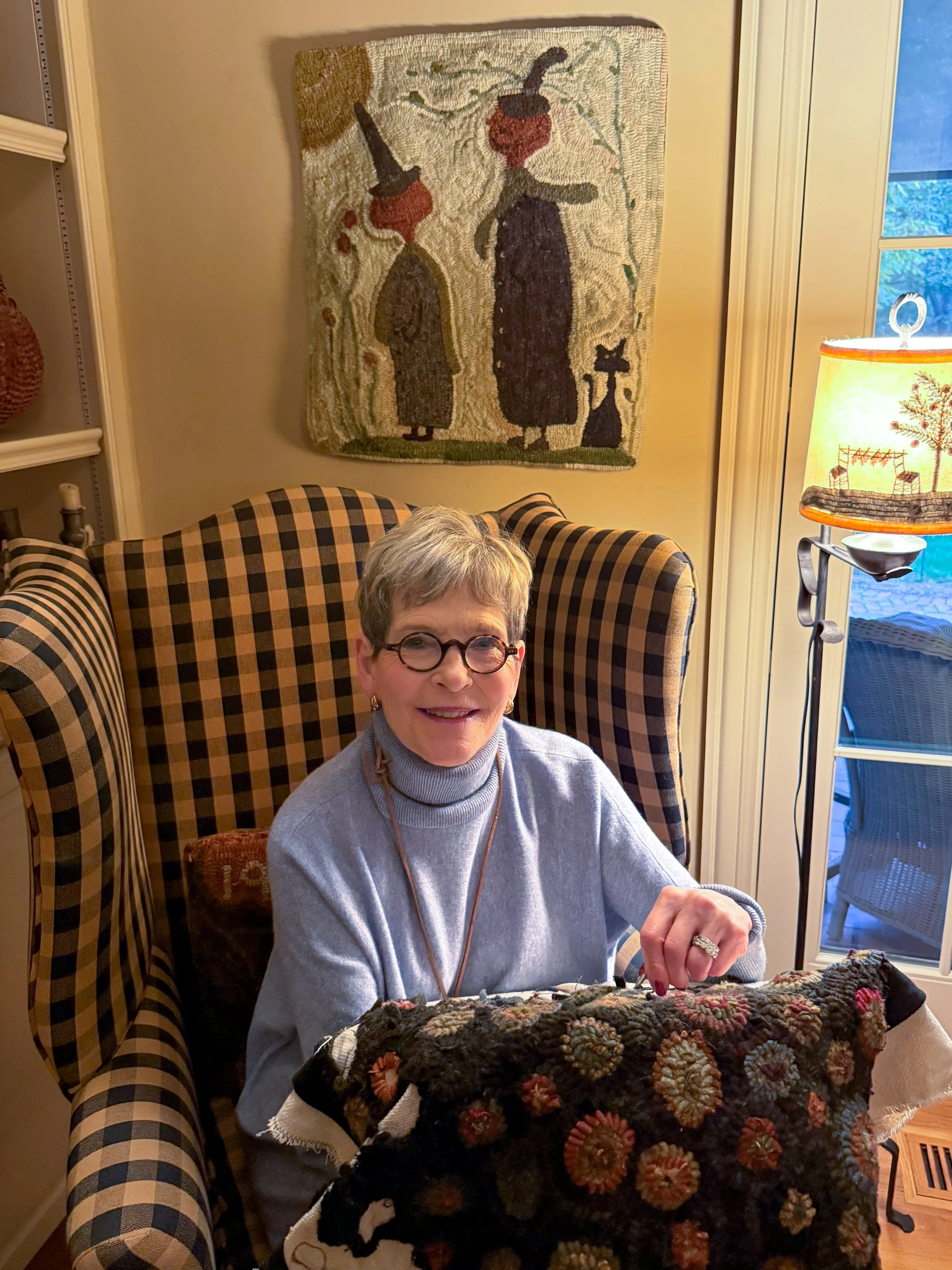
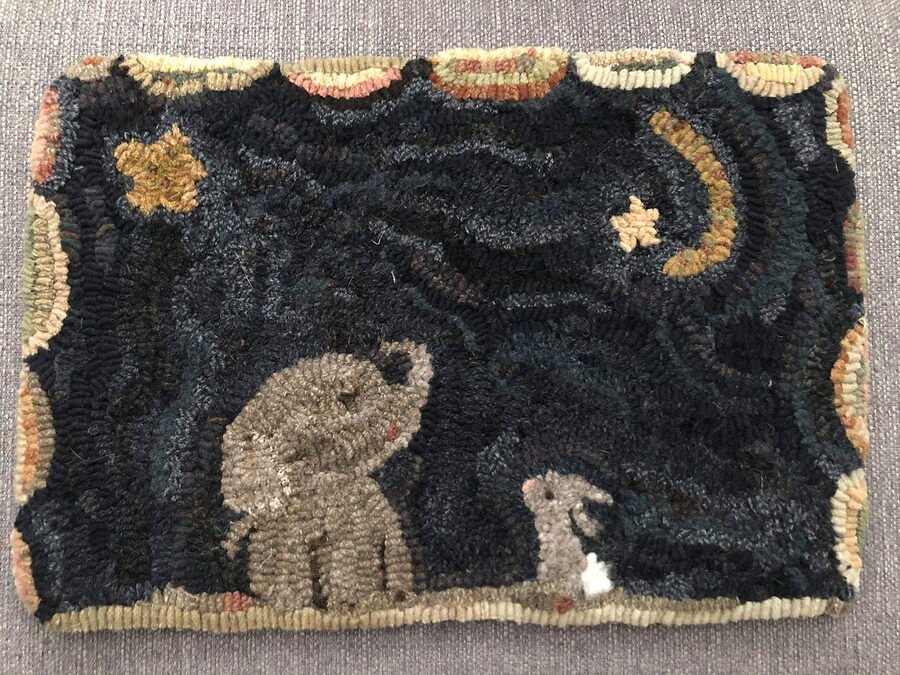
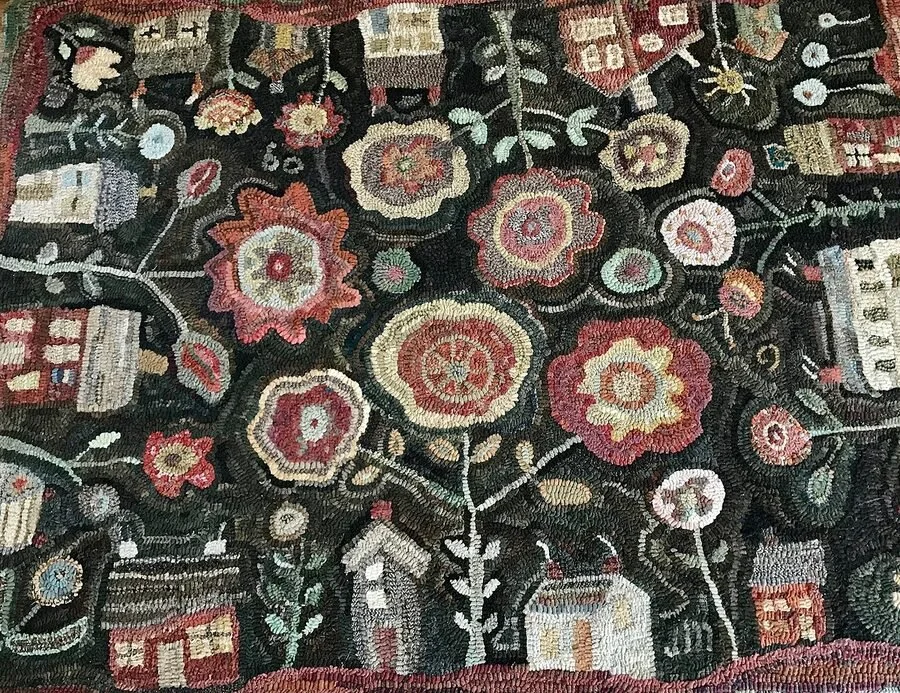
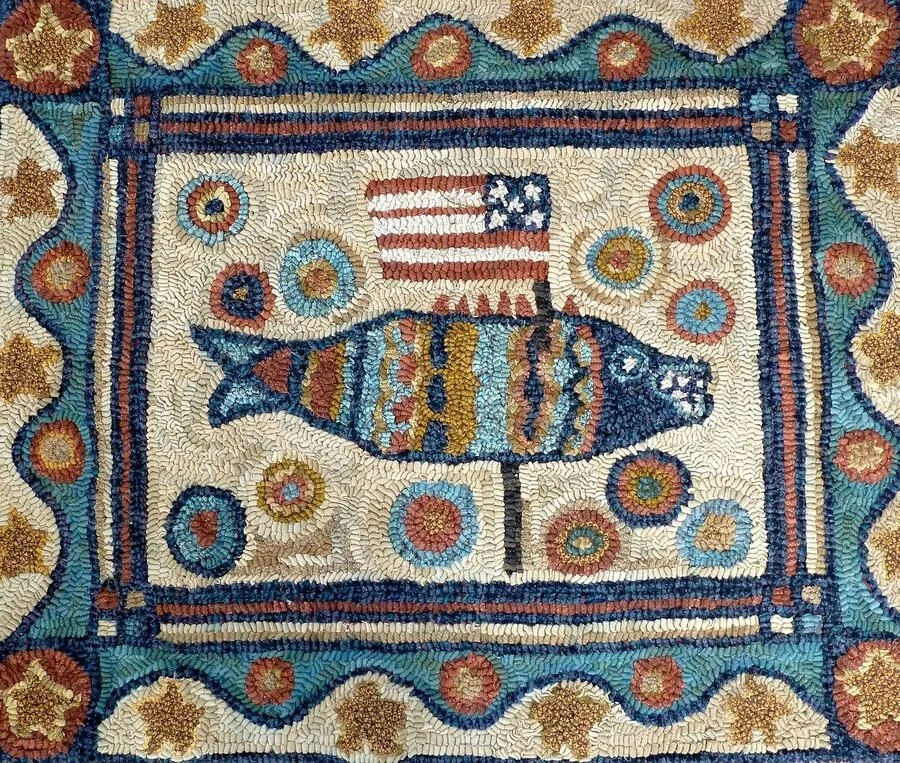
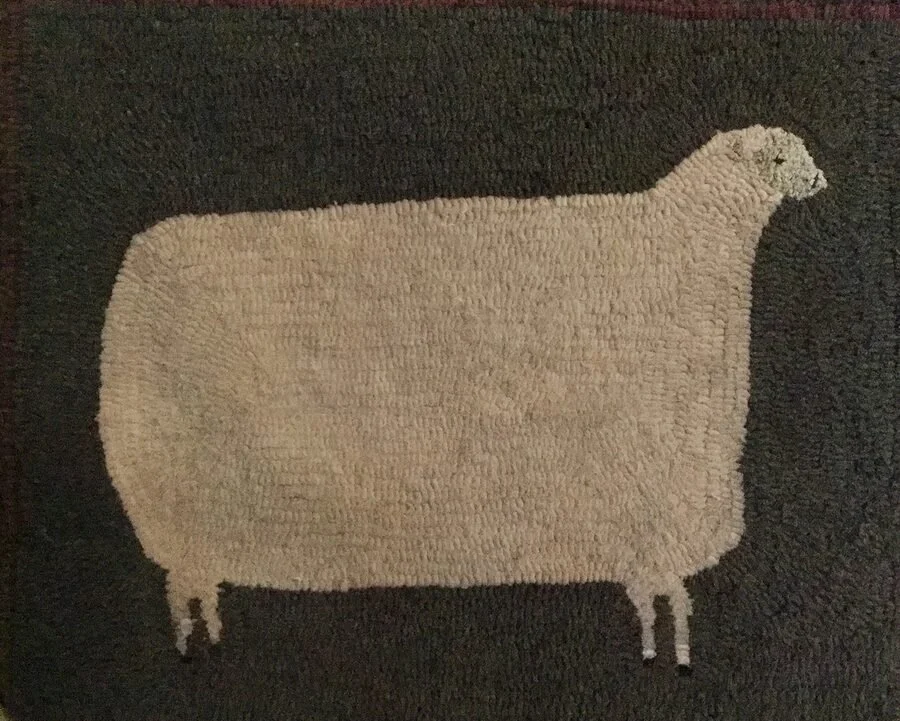
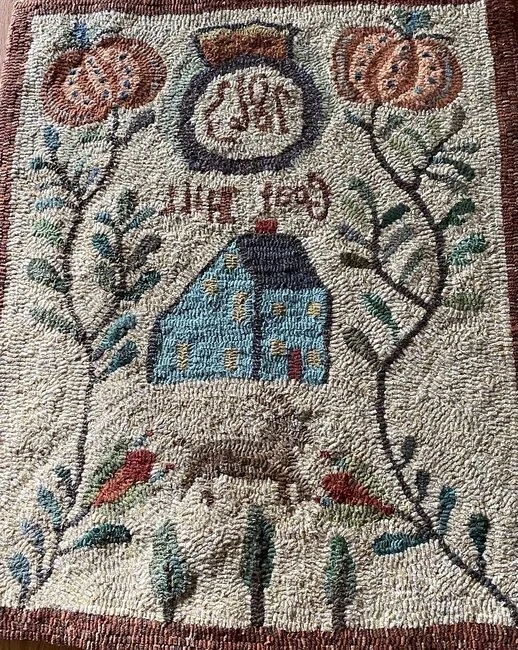
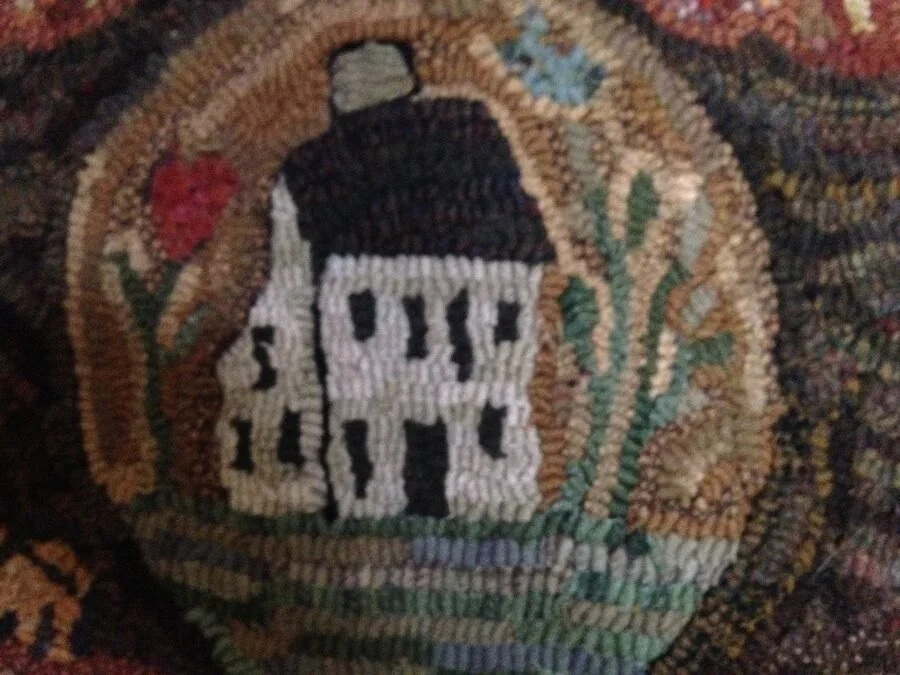
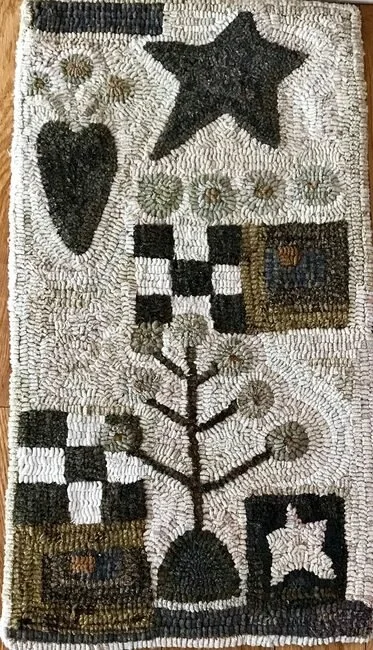
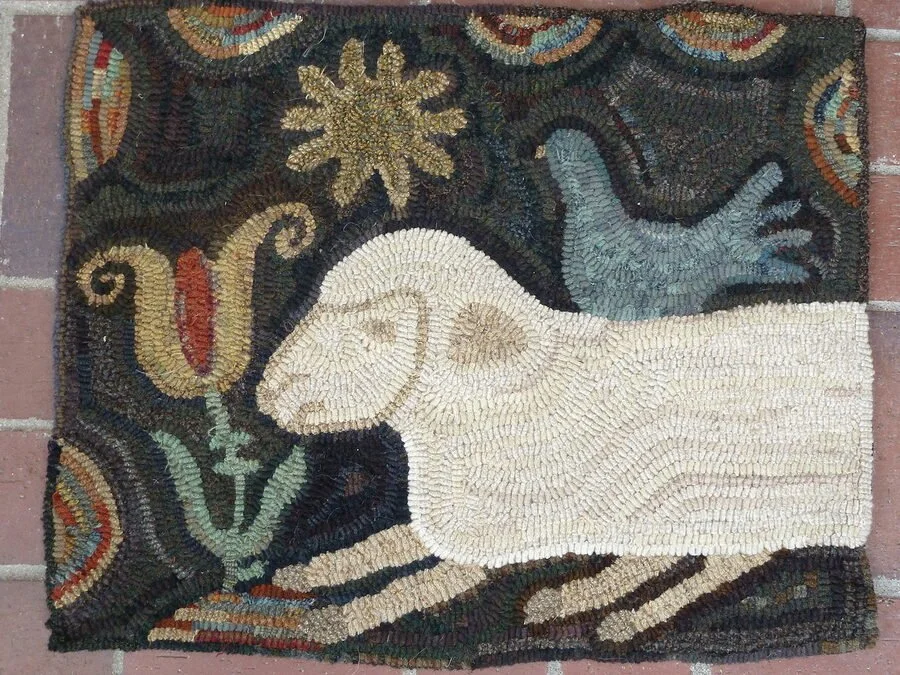
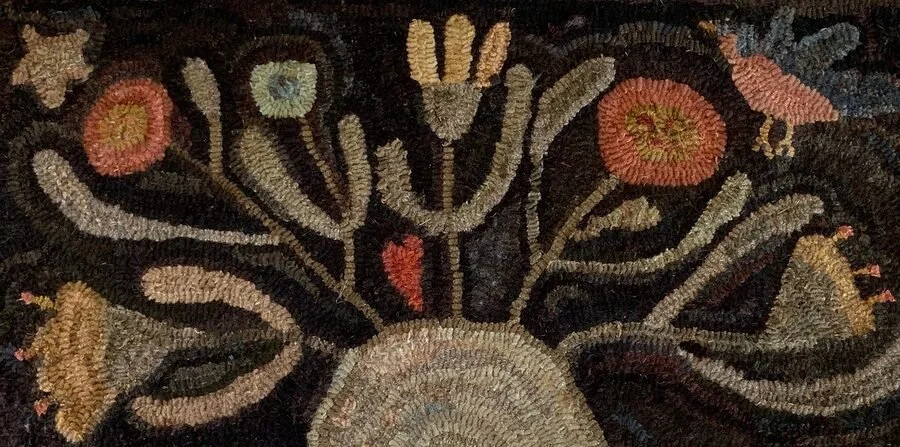
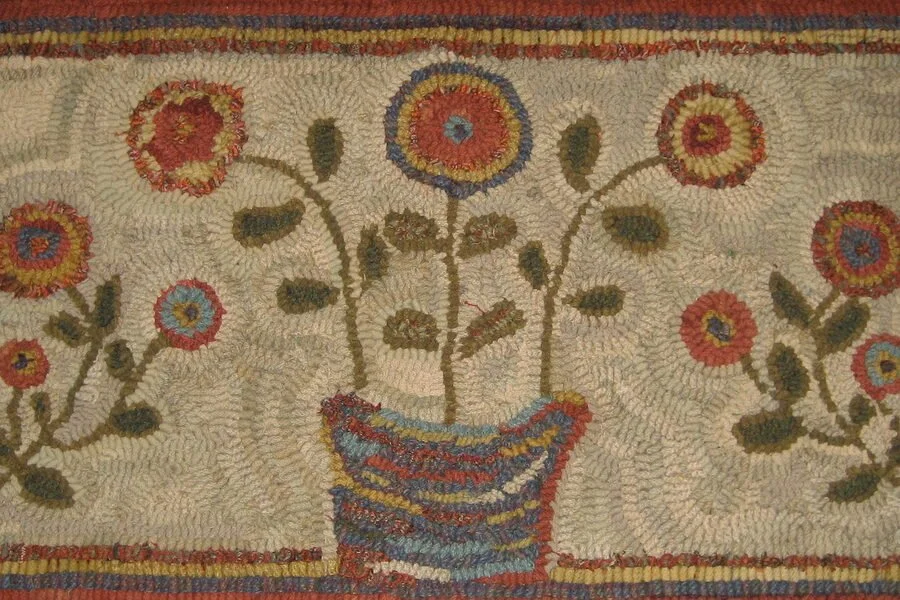
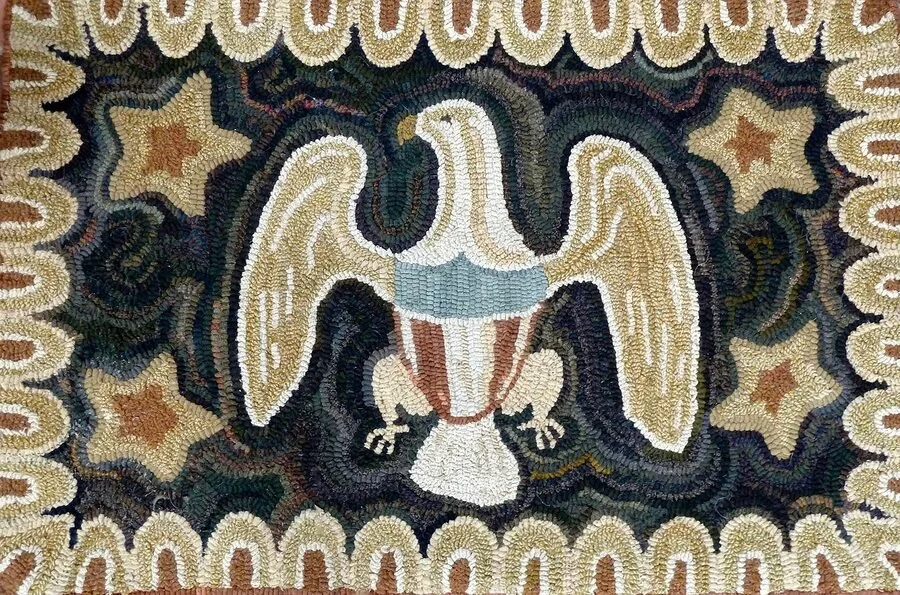
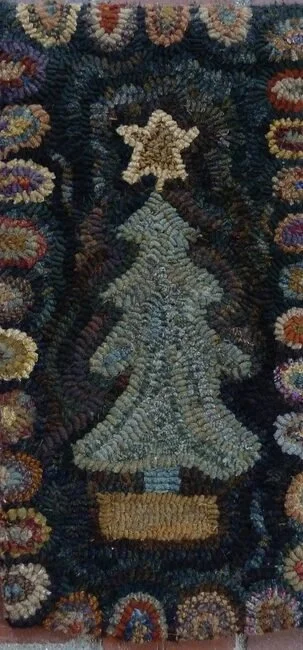
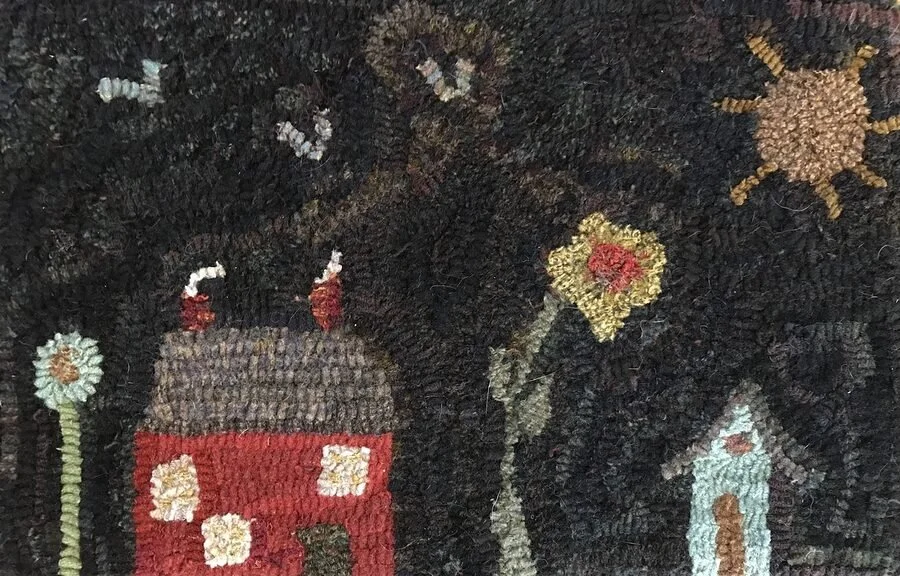
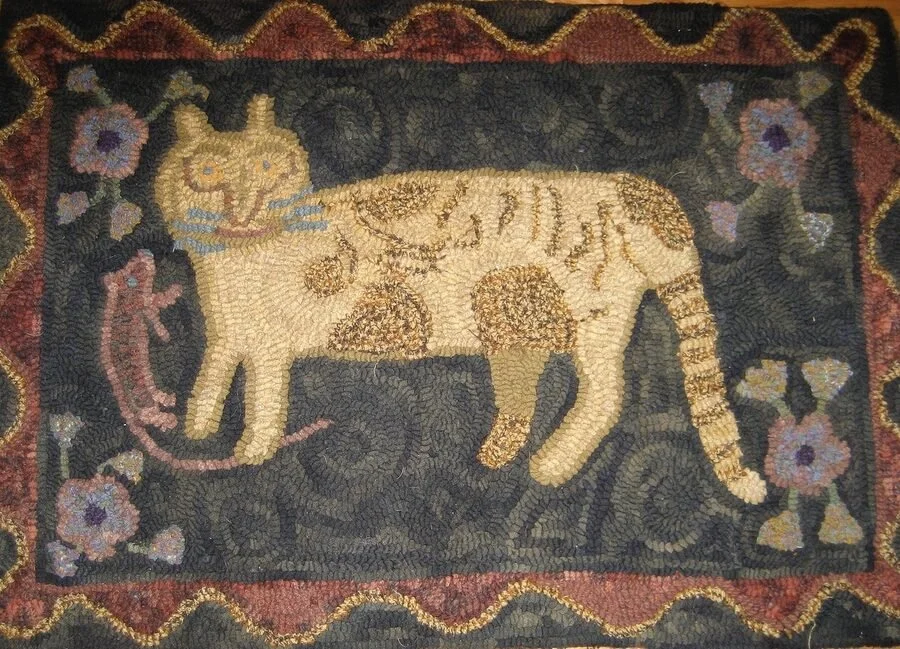
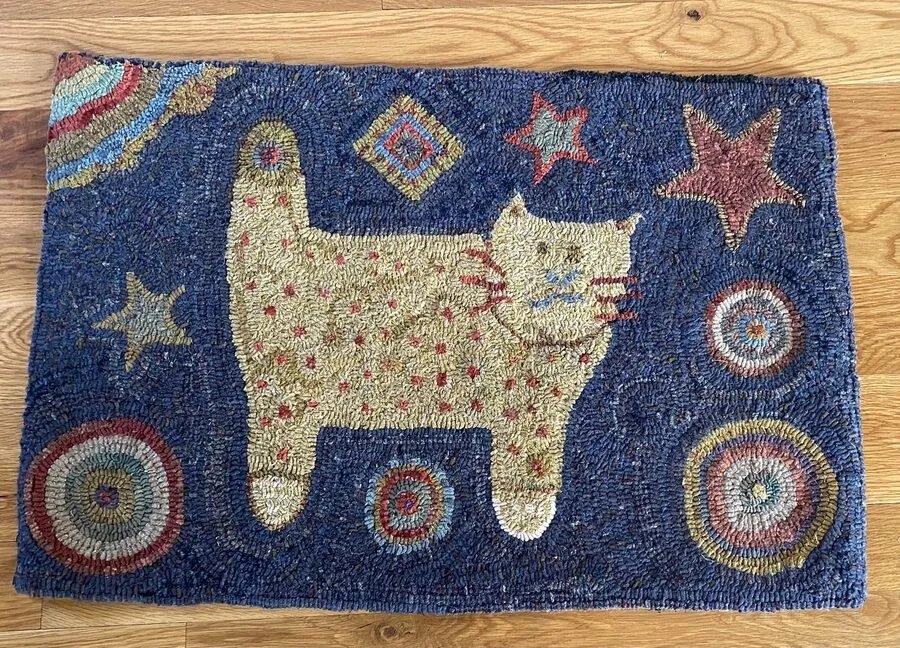
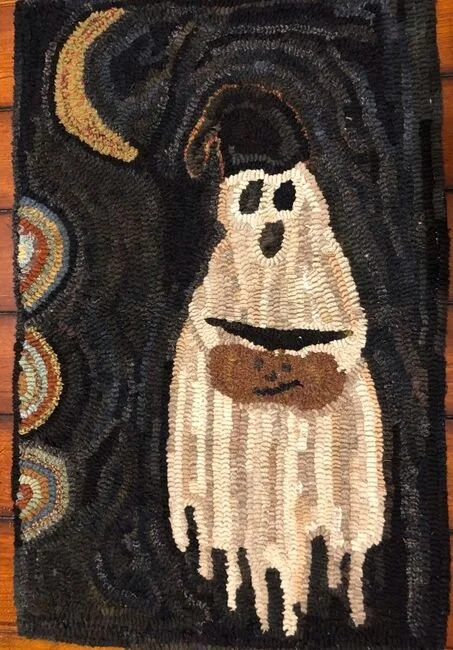
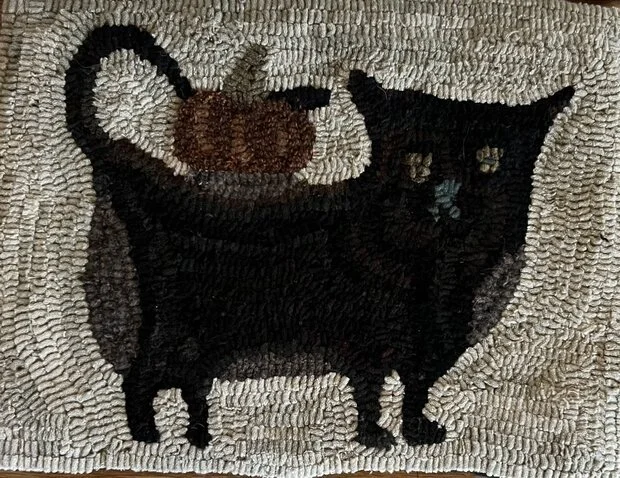
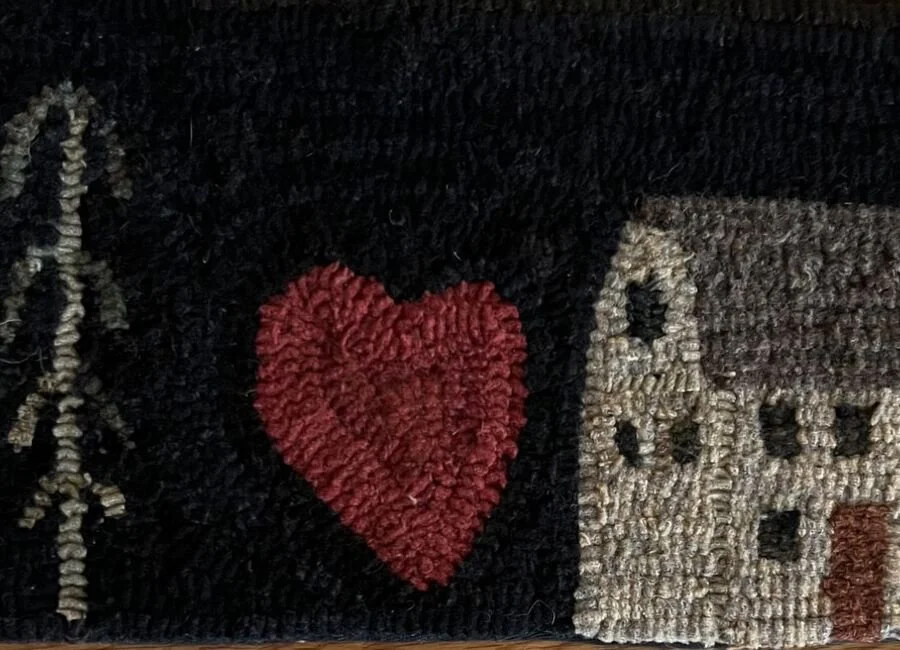
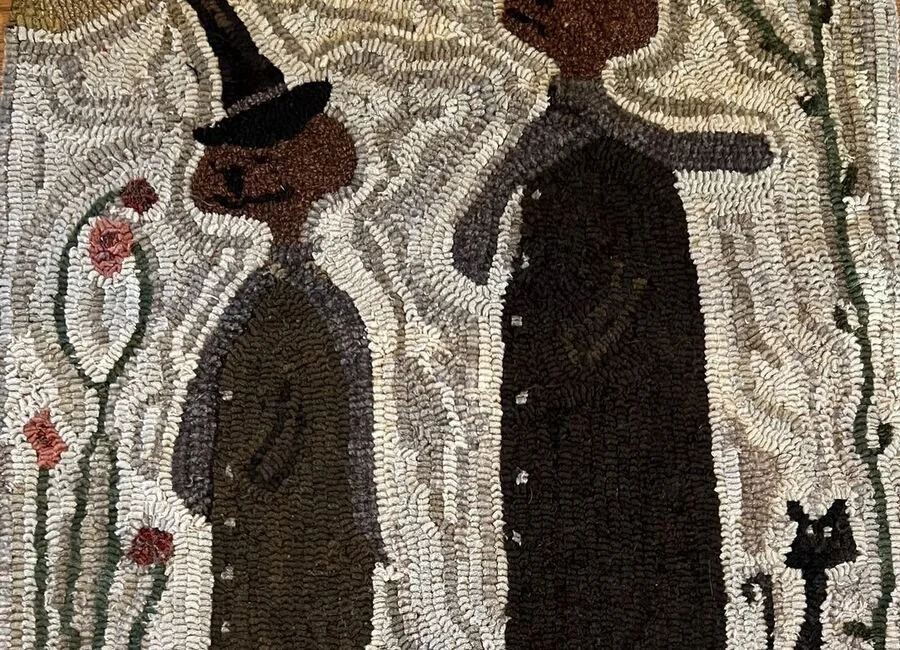
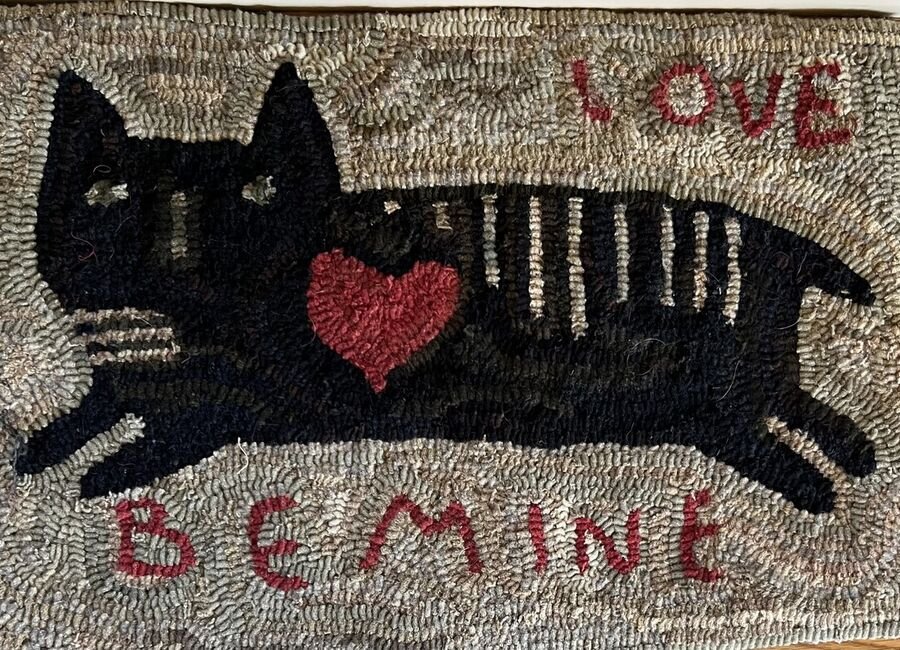
My journey with primitive hooked rugs began in 1985 at a Folk Art Show in Milwaukee, Wisconsin.
I immediately fell in love with the primitive hooked rugs I saw there, but they were more than our budget allowed. Rather than give up on the idea of owning one, I decided to learn how to make them myself.
That decision became the beginning of a lifelong love of rug hooking.
I began taking classes in King, Wisconsin, and later in Milwaukee with the same woman whose rugs had first inspired me at that Folk Art Show. I continued studying with her for three years before seeking out additional teachers and opportunities to learn.
Over the next seven years, I traveled to rug hooking classes in Iowa, Vermont, Maine, and Pennsylvania, learning from some of the finest teachers in the United States and Canada.
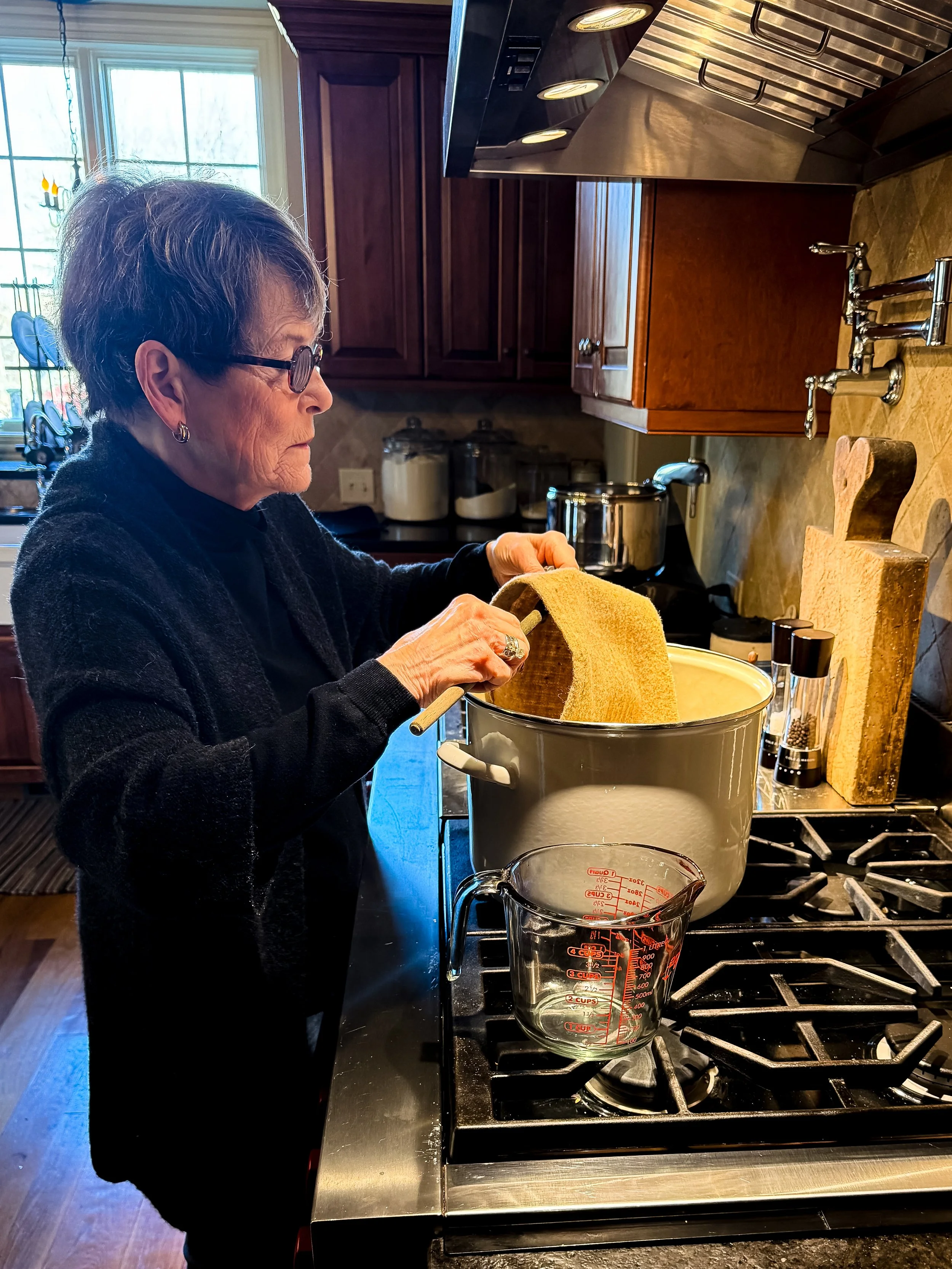
I learned the techniques of hooking, but I also learned how to plan a rug, develop a design, and dye wool.
Of all of those lessons, learning to dye wool became one of the most important. Color is central to a rug. The way colors work together can completely change the character of a piece, and working with color remains one of my favorite parts of the process.
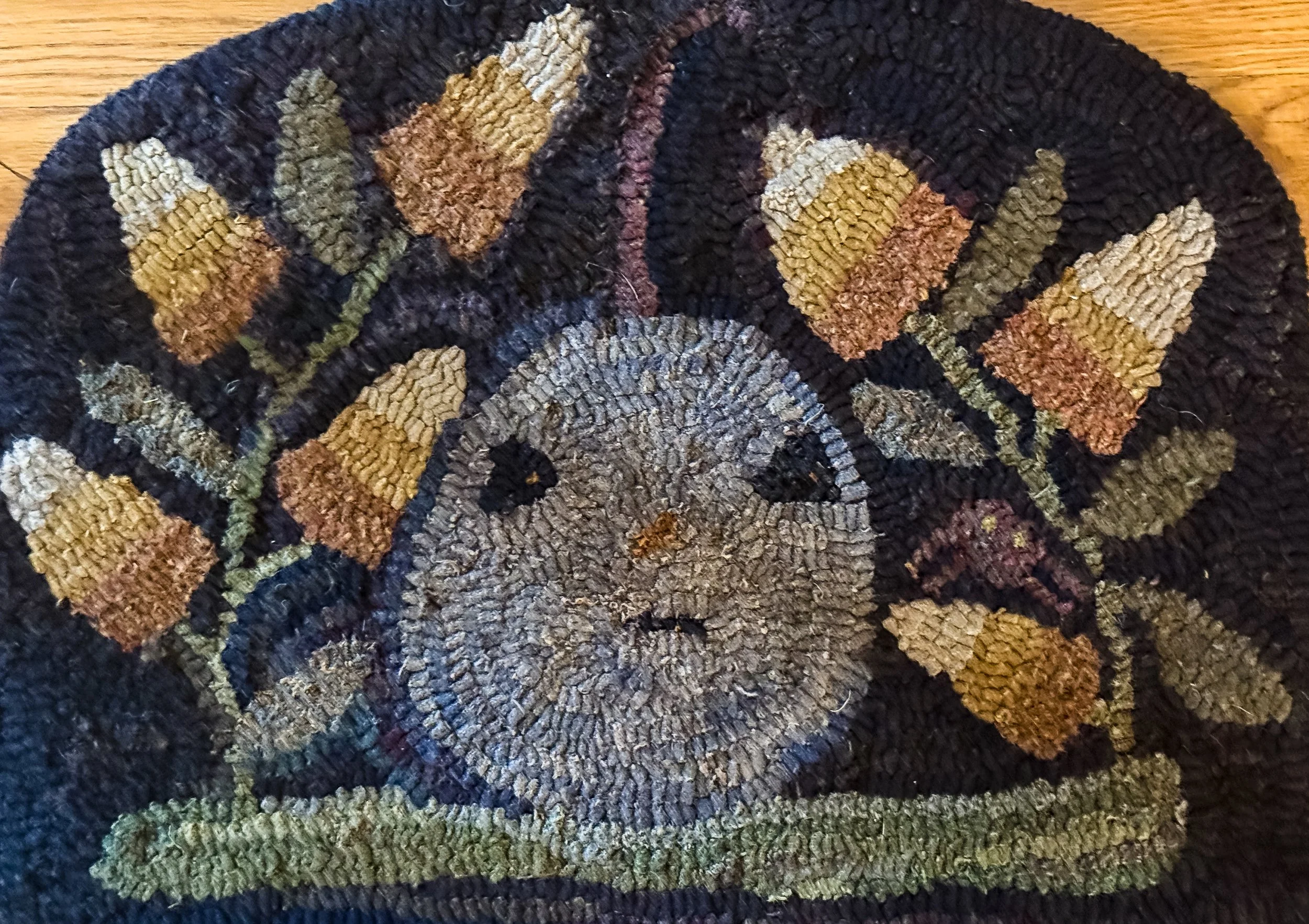
By 1988, rug hooking had become a business.
I began selling my work at a small Folk Art shop in Cedarburg, Wisconsin. After moving to the Twin Cities in Minnesota in 1989, I joined a local rug hooking group and was encouraged to enter the Minnesota State Fair.
I entered two rugs. One large rug won Best of Show, while the other received first place.
The recognition led to commissions from interior decorators and other customers, along with opportunities to sell my work through Folk Art shops in Minnetonka and Eagan. I was also invited to teach rug hooking at a local community college.
Our various moves took my work to Kentucky, California, Illinois, and beyond. In Louisville, I taught rug hooking classes from my home, sold my work through a Kentucky art shop featuring Kentucky artisans, and participated in David T. Smith's show in Ohio. One of my rugs, The Hunt, received Best of Show at the Kentucky State Fair.
After moving to the Los Angeles area, my rugs were sold through an antique store in Orange, California. I was later invited to participate in an art show in Carmel after an LA art show promoter discovered my work.
In 1996, we moved to St. Charles, Illinois, where I continued showing and selling my work, including participation in the St. Charles Folk Art Show. I also taught classes in Nantucket and Colonial Williamsburg and had the opportunity to sell my rugs through the Colonial Williamsburg museum shop.
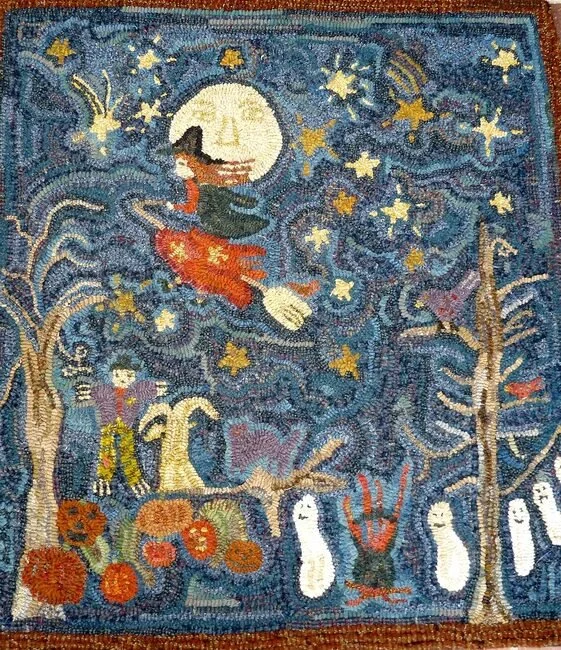
Over the years, my work has been recognized and featured in a number of publications, exhibitions, and television programs.
My rugs have been juried by members of New York museums and selected for Early American Life Magazine and the Directory of Traditional American Crafts. I was selected each year I entered, and several of my pieces were featured in the magazine.
My work and home have also been featured in Primitive Place and Country Sampler.
In the late 1990s, the Daily Herald featured my work in a Sunday article, and I appeared on two episodes of Mary Emmerling's HGTV program Country at Home. One episode explored how hooked rugs work with antiques and enhance a home, while the other focused on rug hooking and dyeing wool.
Beyond the Frame
Rug hooking is a big part of my life, but certainly not the only part.
I have been married for 55 years and am the mother of three boys and grandmother of seven. Our family also includes Winston, our dog, and Pumpkin, our cat.
I enjoy bird watching, cooking and baking, antiquing, and decorating our home. Many of those interests naturally find their way into my work and my appreciation for traditional folk art.
I love creating pieces that feel at home in a well-loved house - especially one filled with antiques, collected pieces, and things that have a story of their own.